


Celery might not be the most exciting vegetable, but it's one of the safest snacks you can give your dog. Here's the full rundown.
In Short:
Yes, celery is safe for dogs and makes a great low-calorie treat. It's high in water, fibre, and vitamins A, C, and K. Cut it into small pieces to prevent choking — the stringy fibres can be a hazard, especially for small dogs. It can also help freshen your dog's breath.
Serve it raw or cooked, plain, with no dips or seasoning.


The Short Answer
Yes, dogs can eat celery. It's non-toxic, low in calories, and actually offers some genuine nutritional benefits. Many vets recommend celery as a healthy treat option for dogs that need to lose weight.
It contains vitamins A, C, and K, along with potassium, folate, and fibre. The high water content — around 95 percent — also makes it a hydrating snack.
How to Prepare Celery for Your Dog
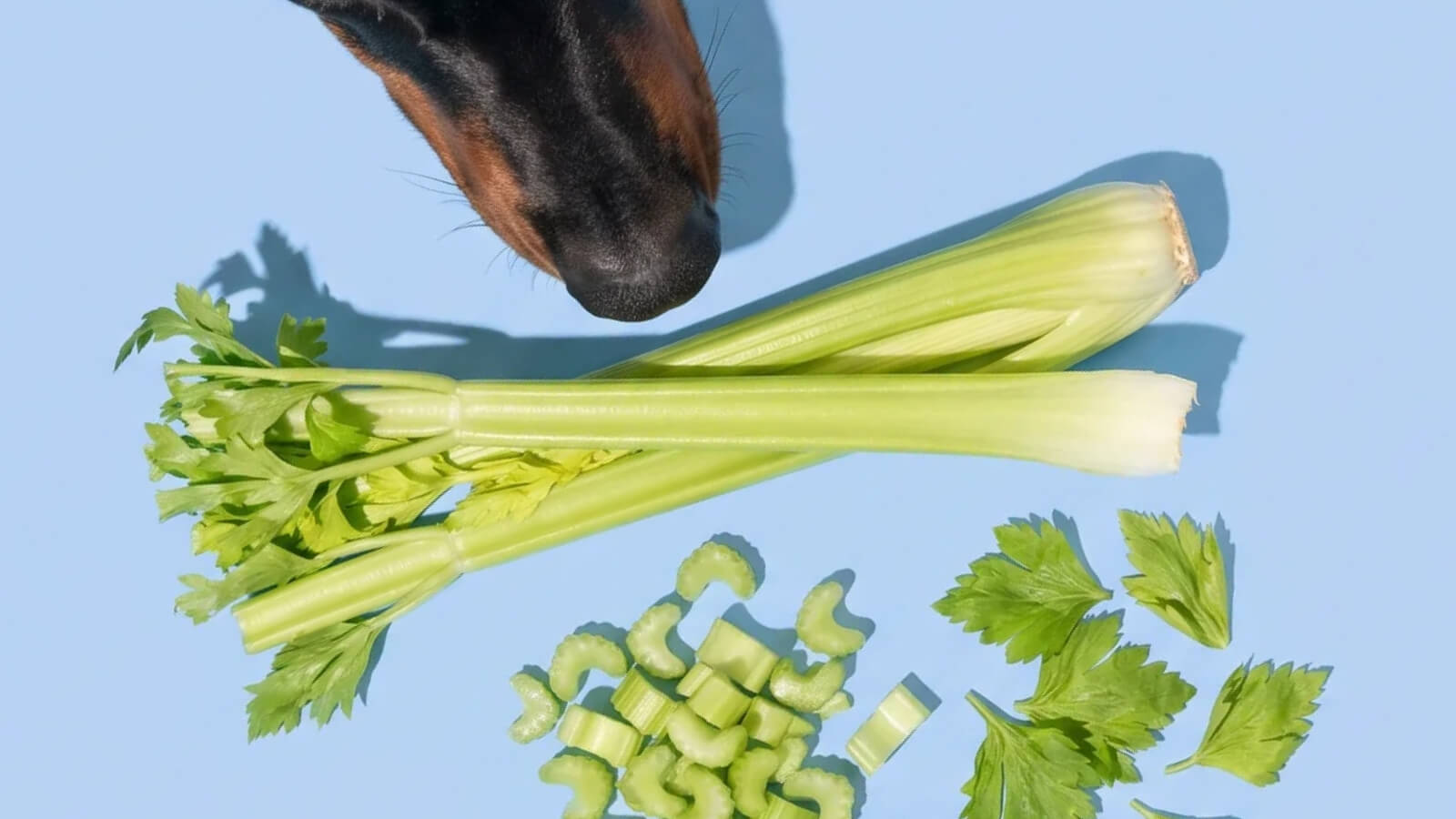
The most important step is cutting it into small, manageable pieces. Celery stalks have long, stringy fibres that can be a choking hazard, particularly for smaller breeds. Cutting it into bite-sized chunks reduces this risk significantly.
For small dogs, slice the celery into thin rounds no bigger than a centimetre. For larger dogs, small sticks or chunks are fine.
Raw celery is the most common way to serve it and retains the most nutrients. Cooked celery is also safe — steaming softens the fibres and makes it easier to digest for older dogs or those with dental issues.
Never serve celery with peanut butter dip, hummus, cream cheese, or any other topping meant for humans. These add unnecessary calories, fat, and in some cases, toxic ingredients like xylitol.

Benefits of Celery for Dogs
Low calorie content is the standout benefit. A stick of celery has roughly 6 calories, making it one of the lowest-calorie treats available. For overweight dogs on a diet, celery can replace higher-calorie commercial treats without sacrificing the reward experience.
Freshening breath is another commonly cited benefit. The crunchy texture and high water content can help clean teeth and reduce bad breath. It's not a replacement for dental care, but it's a nice bonus.
The fibre content supports healthy digestion in moderate amounts. And the vitamins and antioxidants, while present in small quantities per serve, contribute to overall health when celery is part of a varied diet.
Can a Dog Have Too Much Celery?
Yes, moderation still matters. Celery is high in fibre and water, and too much can cause loose stools, gas, or stomach discomfort.
As with any treat, celery should make up no more than about 10 percent of your dog's daily calorie intake. A few small pieces a day is plenty for most dogs.
Some dogs simply won't like celery. The texture and mild flavour don't appeal to every palate, and that's fine. There's no reason to force it.
For your dog's balanced everyday meals, a quality dry food does the heavy lifting. Check out our guide to the Best Dry Dog Food in Australia.
Frequently Asked Questions
Can celery help my dog lose weight?
It can help as a treat substitute. Replacing high-calorie commercial treats with celery reduces daily calorie intake without removing the reward entirely. Weight loss ultimately comes from overall diet management, but celery is a useful tool in that process.
Is celery a choking hazard for dogs?
The stringy fibres can be, especially for small dogs or dogs that gulp food without chewing. Always cut celery into small pieces before offering it. This is the simplest way to eliminate the risk.
Can dogs eat celery leaves?
Yes, celery leaves are safe for dogs. They're actually more nutrient-dense than the stalks. Offer them in small amounts, as the flavour is stronger and some dogs may not enjoy them.
Can puppies eat celery?
Yes, in small amounts. Cut it into very small pieces to prevent choking, and introduce it slowly. Puppies have more sensitive digestive systems, so watch for any signs of stomach upset after the first offering.
Does celery really freshen a dog's breath?
To some extent, yes. The act of chewing crunchy celery can help scrape mild plaque from teeth and the water content helps rinse the mouth. It's not a cure for serious dental issues or persistent bad breath, but it can make a noticeable difference for mild cases.











Comments
0 comments